
Scott County Parole and Probation
Mississippi splits the legal decision from field supervision. The Mississippi State Parole Board decides whether an eligible state prisoner may leave prison on parole and may act in revocation matters. The Mississippi Department of Corrections, or MDOC, supervises parole, probation, earned-release supervision, and other community placements through Community Corrections. A Scott County judge orders probation. That sentence may begin in the community, so a probation record is not proof that the person was released from an MDOC prison.
Parole is conditional release from prison before the whole sentence has ended. Probation is a court-ordered sentence or part of a sentence served under stated terms in the community. Earned-release supervision, often shortened to ERS, is another category. A person on ERS retains inmate status and remains under MDOC jurisdiction through sentence expiration. Full discharge is different from all three because the identified term of supervision has ended.
| Status | Who authorizes it | Best verification record |
|---|---|---|
| Parole | Mississippi State Parole Board | Board authority plus MDOC Parolees Search |
| Probation | Sentencing court | Sentencing order plus MDOC Community Corrections |
| Earned-release supervision | State law and MDOC computation | MDOC status, timesheet, or written record |
| Discharge | Depends on the sentence and supervision type | Discharge certificate, order, or MDOC record |
- Parole
- Conditional release from state prison under Board-set terms.
- Probation
- Court-ordered community supervision that may occur without a prison release.
- Absconder
- A person alleged to have stopped reporting or complying, not a person who finished supervision.
- Discharge
- The formal end of the identified sentence or supervision obligation.
Verify Scott County Post-Release Supervision
The strongest check follows the agency chain instead of relying on one screen. MDOC places an Inmate Search and a separate Parolees Search on its official home page. Both accept first name, last name, or MDOC number. The number is the best key when known. A correct Parolees Search match supports parole status after prison release, but no match does not prove that supervision ended. The person could be on probation, ERS, fully discharged, entered under a different spelling, or back in custody.
Use the following order to verify Scott County parole or probation without turning a missing result into a false conclusion:
- Search MDOC by MDOC number, or use the full name and compare biographical details. Record the exact status shown.
- Check the separate Parolees Search. Do not treat a state inmate result with a future date as proof that release already occurred.
- For parole, confirm the legal authority with the Parole Board. For probation, obtain the Scott County sentencing or revocation order from the proper court.
- Contact the Scott Probation & Parole Office for local routing and releasable status information. Do not ask for a private reporting schedule.
- If documentary proof is needed, submit a focused written request to MDOC for the supervision status, discharge date, or related releasable record.
A county jail release record answers a different question. It can show when a Scott County booking ended and whether the person left for the community or another custodian. The complete county release path is described on the Scott County released inmates search. MDOC covers state custody and state supervision, not each local bond-out.
The MDOC search screen shows why the inmate and parolee tools must be checked separately.
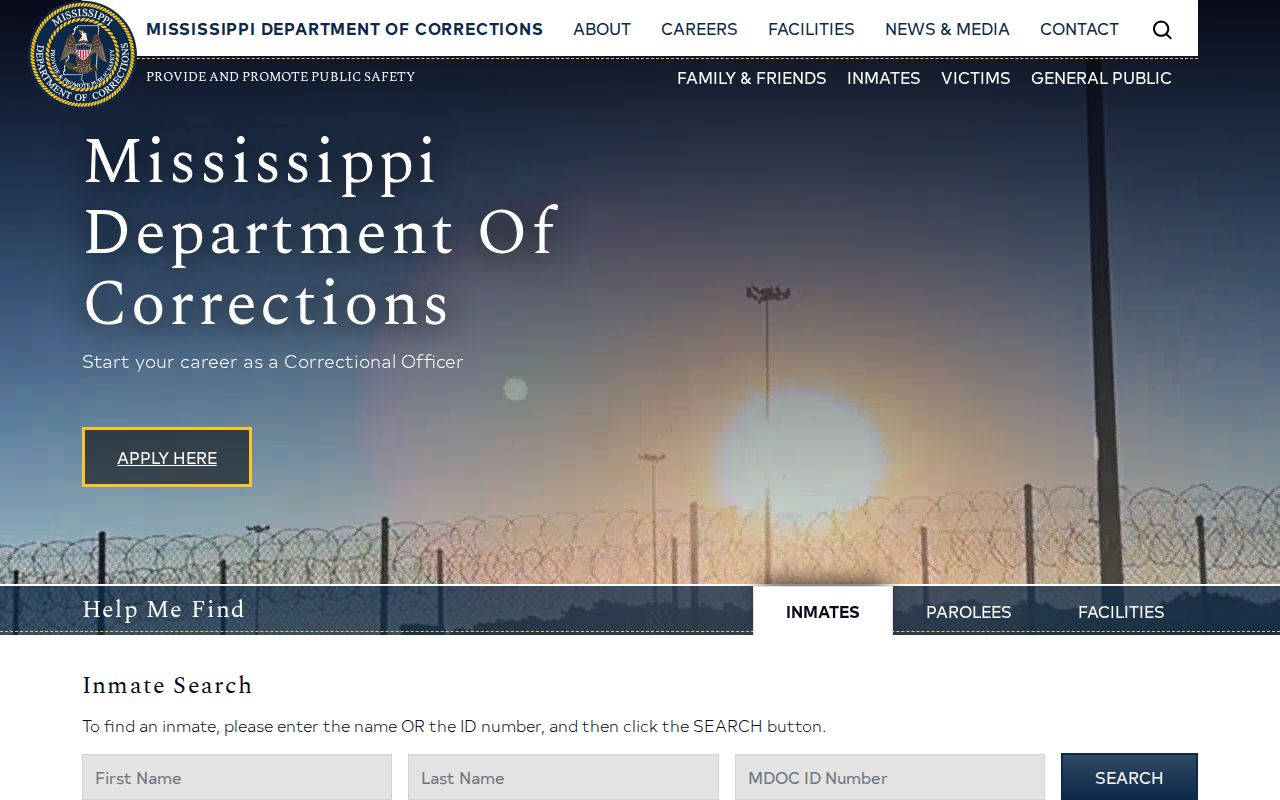
Those two paths help distinguish a current state-prison record from a parole classification, while the court remains the key source for probation.
Note: Use at least two identity points, since a common name alone can attach the wrong Scott County supervision record to a person.
Scott County Supervision Office
The local Community Corrections office is a distinct Scott County parole and probation access point. MDOC lists Jason Carney as Community Corrections Director. The office shares the same Airport Road street address as the Scott County Jail, but the functions and telephone numbers are separate. Jail staff handle detention and local booking questions. Community Corrections handles state supervision routing. Physical proximity does not merge either agency’s files.
Scott Probation & Parole Office
531 Airport Road
PO Box 626
Forest, MS 39074
Phone: 601-469-3376
Fax: 601-469-3714
Hours: Not published; call first.
The office page does not publish walk-in rules, hours, or check-in mechanics. Call before visiting. Staff may route a question about office assignment or public status, but the research does not support a promise that staff will disclose case notes, a home address, or an individual reporting plan.
The official Scott office listing displays the local address and number.
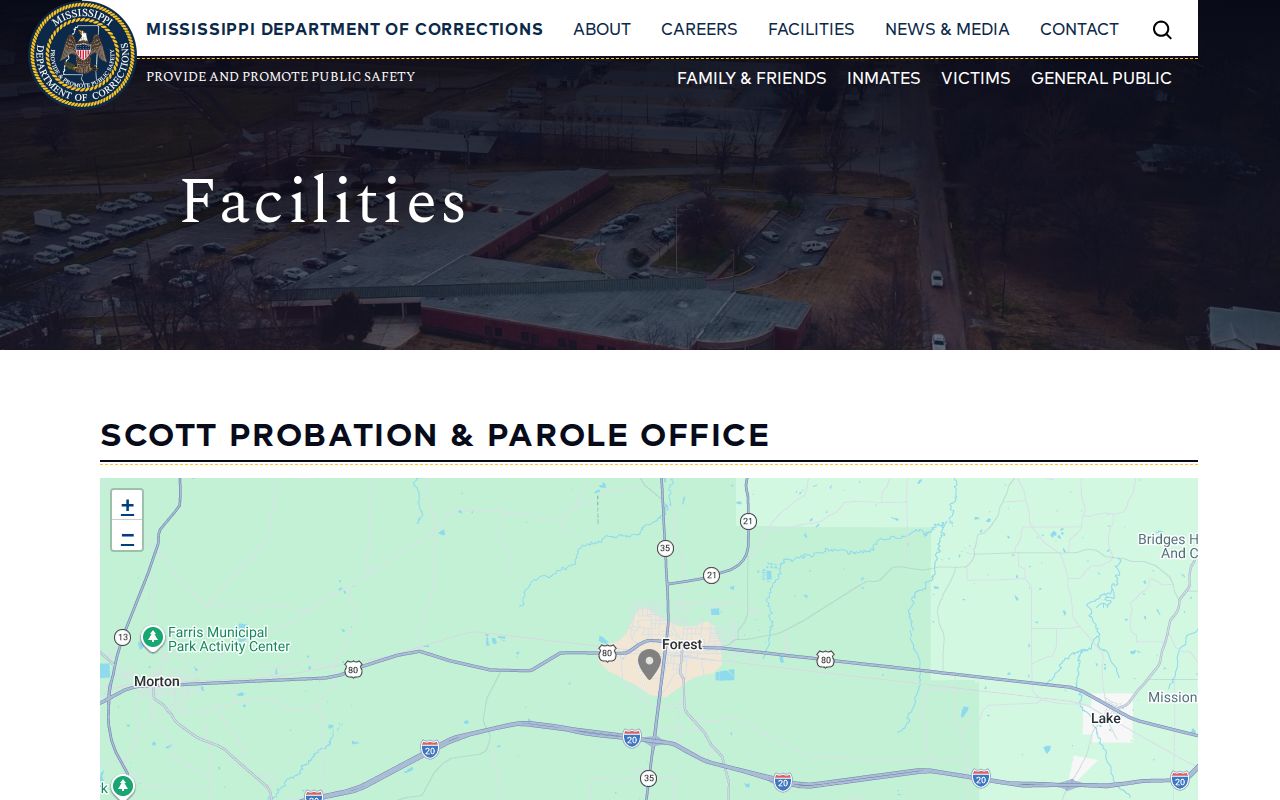
This office listing is the direct local source for MDOC supervision routing, not a detention roster or release ledger.
Scott County Parole Board Evidence
Parole eligibility and a grant of parole are not the same event. Mississippi Code §47-7-3 is the main parole-eligibility law, and Mississippi Administrative Code Title 29, Rule 3.1 addresses eligibility and exclusions. Eligibility means the Board may consider a state prisoner. It does not promise release on the eligibility date, and a date in an MDOC profile is not a Board decision.
No current public Board hearing calendar or individual decision-results database was verified in the sources reviewed. The MDOC Parolees Search cannot be recast as a Board decision archive. For a scheduled hearing or releasable outcome, contact the Mississippi State Parole Board at 601-576-3520 or submit a focused records request. Historical Parole Board minutes held by the Mississippi Department of Archives and History run through 2009 in the cited series; they do not resolve a current Scott County case.
Scott County Absconder Status
An absconder is alleged to have stopped complying with supervision or reporting. The label does not mean the person completed parole or probation. A warrant or absconder action can lead to arrest and return to custody. Mississippi SAVIN/VINE may send an abscond-supervision or return-to-custody event when the supplying agency reports one. A VINE event is useful notice, but the supervising authority and warrant record control the status.
No Scott County-specific public absconder list was found. The statewide fugitive pages linked by the sheriff are not a complete supervision roster. Check MDOC’s exact status, contact Community Corrections, and use the appropriate court or warrant custodian. Never translate a missing public listing into “off supervision.” A spelling mismatch, data lag, a new custody event, or an unlisted status may explain the gap.
Note: A transfer or return-to-custody notice marks a change of custodian; it does not show that Scott County supervision ended successfully.
Scott County Supervision Conditions
Conditions are the rules attached to parole, probation, or ERS. Their source varies. A judge sets probation terms. The Parole Board and MDOC administer parole-related terms under Mississippi law. Common high-level duties can involve reporting, following travel or residence rules, paying court-ordered sums, and avoiding new violations, but the actual order and agency record control each case. The research does not support publishing a generic list as though it applied to every Scott County person.
A claimed violation also does not prove revocation. Revocation is the legal or administrative act that changes supervision after required proceedings. Read the revocation order or Board action, then check custody status. If the person is returned to the Scott County Jail on a warrant, the jail booking record documents local physical custody. If MDOC receives the person, the state record is the right state-custody source.
Scott County Supervision Discharge
Supervision ends through a formal event, not merely because a name disappears from a search. For parole or ERS, ask MDOC for the discharge certificate, inmate summary, timesheet information, or other releasable record that states the end date and type. MDOC public-record requests must be written through its GovQA portal; telephone requests are not accepted as formal public-record requests. For probation, the court’s discharge or termination order is the key legal record.
Read the label with care. Parole means release from prison while the sentence continues under terms. ERS means the person remains under MDOC jurisdiction until sentence expiration. Discharge shows the identified state sentence or supervision has ended, though it says nothing by itself about another open case or agency hold. A fresh warrant may also create new custody after an earlier discharge.
The practical evidence chain is concise: MDOC inmate record and tentative date before release, Board authority when parole is considered, Parolees Search or Community Corrections after release, then a discharge record at the end. Court orders supply the probation chain. Using the right source prevents a Scott County parole record from being mistaken for probation, and it prevents conditional release from being described as full sentence completion.